How to Start a Lead Generation Company (7 Steps)
Start a profitable lead gen business in 2026. Follow these 7 steps: pick a niche, build campaigns, find buyers, and scale to $10K+/mo with real examples.

Rafael Hernandez
Founder & CEO
Ex-Microsoft SWE · $10M+ PPL ad spend

I hope you enjoy reading this blog post. If you want to try Lead Distro AI for free, click here.
Author: Rafael Hernandez | Founder & CEO of Lead Distro AI
Starting a lead generation company comes down to seven steps: pick a profitable niche, build campaigns that capture demand, set up the right tech stack, find buyers who will pay for your leads, configure automated distribution, track your unit economics, and scale what works. The business model is simple. You spend money to generate consumer inquiries, then sell those inquiries to businesses that need customers. The difference between a side project and a real company is how well you execute each step.
The lead generation industry is projected to reach $15.55 billion by 2031, according to Allied Market Research. According to HubSpot's 2024 State of Marketing report, 50% of marketers consider lead generation their top priority. And with the average cost per lead varying from $15 in home services to $200+ in legal, the margins are there for anyone willing to build a real operation. This guide walks you through every step from zero to a running lead gen business with paying buyers.
Key Takeaways
- Choose a niche first. Your vertical determines your lead prices, buyer pool, and campaign strategy. Legal and insurance leads pay the most but cost more to generate.
- Technology is the differentiator. Manual lead delivery through email and spreadsheets does not scale. A lead distribution platform automates routing, billing, and quality control from day one.
- Buyer relationships drive revenue. A strong buyer network of 5+ active buyers lets you sell every lead at the best price and avoid single-point-of-failure risk.
- Unit economics determine survival. Track cost per lead, revenue per lead, and profit per lead obsessively. If you cannot generate leads cheaper than you sell them, nothing else matters.
Step 1: Choose Your Niche
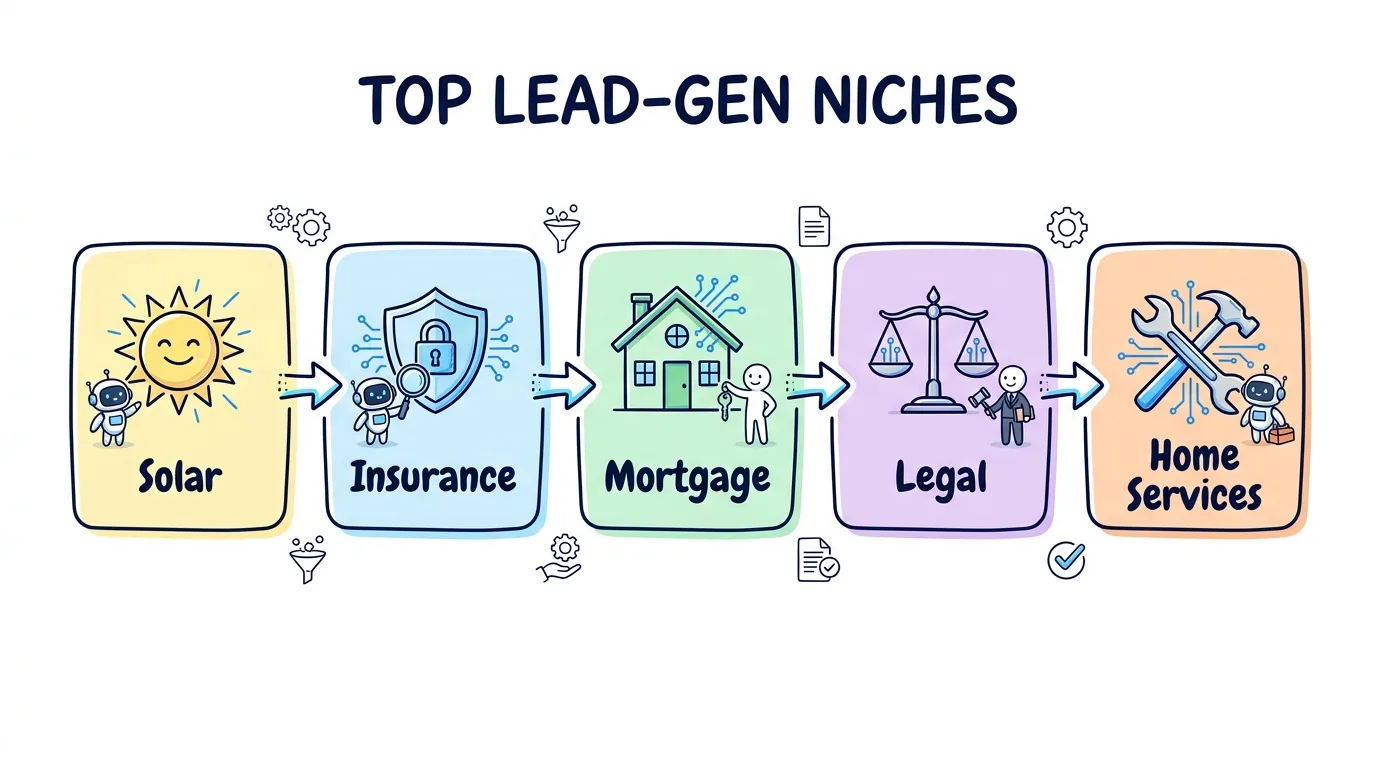
Your vertical choice is the single most important decision you will make. It determines your lead prices, campaign costs, buyer availability, and long-term margins. The best verticals for new lead generation companies share three traits: high customer lifetime value (so buyers pay well for leads), consistent demand (not seasonal), and accessible advertising channels.
Here is how the most popular verticals compare:
| Vertical | Avg Lead Price | Competition Level | Startup Difficulty |
|---|---|---|---|
| Personal Injury Legal | $80-$200 | High | Hard |
| Auto Insurance | $15-$40 | High | Medium |
| Home Services (HVAC, Roofing) | $15-$50 | Medium | Easy |
| Solar | $25-$70 | Medium | Medium |
| Mortgage/Refinance | $30-$80 | High | Hard |
Start with one vertical. Going wide too early splits your budget, your attention, and your buyer relationships. If you are new to lead generation, home services is the most forgiving starting point: lower ad costs, simpler compliance, and buyers who are easy to reach. For a ranked breakdown of all 40 verticals by profitability and scalability, see our guide to the best lead generation niches.
Step 2: Set Up Your Lead Generation Campaigns
Once you have picked your niche, you need to build the campaigns that generate leads. There are four primary channels:
Paid ads (fastest to launch). Google Ads and Meta (Facebook/Instagram) are the two biggest channels for lead gen. Google captures high-intent search traffic. Meta lets you target demographics and interests at scale. According to WordStream, the average conversion rate across Google Ads is 4.40% for search, giving you a baseline for forecasting volume.
Landing pages. Every campaign needs a dedicated landing page with a clear offer, a form, and a strong call to action. Do not send traffic to a generic website. Purpose-built landing pages convert 2-5x better than homepage traffic.
SEO and content. Slower to start, but organic traffic has zero marginal cost per lead once it ranks. Blog content, local SEO, and niche comparison pages generate leads without ongoing ad spend.
Forms and call tracking. Capture leads through web forms and inbound calls. Both need proper tracking so you know which source, campaign, and keyword generated each lead.
Step 3: Build Your Tech Stack
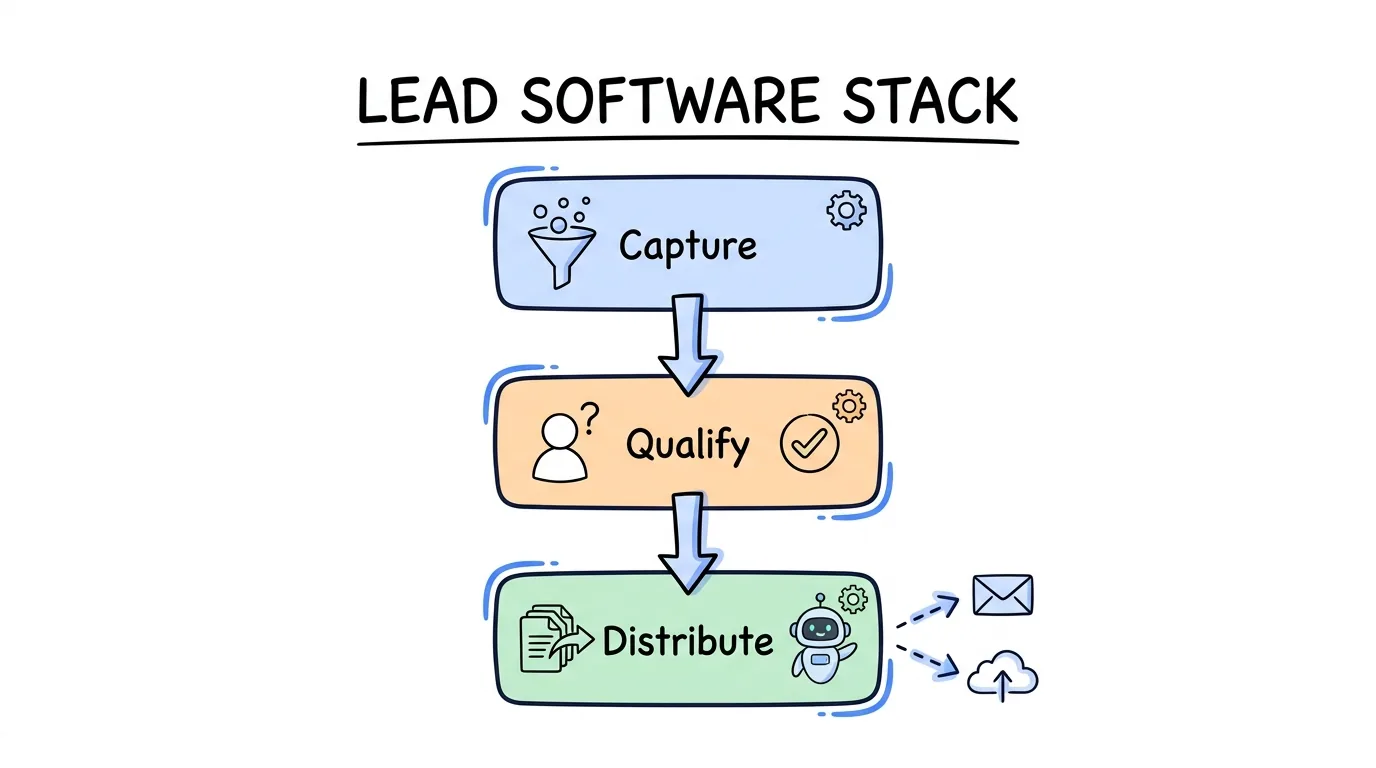
The right technology stack separates a hobby from a business. At minimum, you need:
Lead distribution platform. This is the core of your operation. A distribution platform handles lead routing, buyer management, cap enforcement, duplicate detection, and real-time delivery. Without one, you are stuck copying leads from spreadsheets into emails. Lead Distro AI gives you automated distribution, AI-powered scoring, ping-post bidding, and revenue analytics in one platform.
Tracking and analytics. You need to track cost per lead by source, revenue per lead by buyer, and conversion rates at every step. Google Analytics, call tracking software, and your distribution platform's built-in reporting should give you full visibility.
CRM or buyer portal. Your buyers need a way to receive leads, report on dispositions, and manage their account. A buyer portal eliminates back-and-forth communication and builds trust.
Billing and invoicing. Automated billing based on delivered leads saves hours of manual work. Your distribution platform should track deliveries and generate invoices automatically.
Take a product tour to see how a modern distribution platform handles all of this in one system.
Step 4: Find and Onboard Lead Buyers
Generating leads is only half the business. You need buyers willing to pay for them. Here are four channels to build your buyer network:
Direct outreach. This is the most reliable method. Identify businesses in your niche, find the decision maker, and pitch a trial batch of 10-20 leads. Law firms, insurance agents, contractors, and solar installers all buy leads. Start local where you can build personal relationships.
Lead marketplaces. A lead marketplace connects sellers with buyers at scale. You list your inventory, buyers browse and purchase, and the platform handles matching and delivery. This is the fastest way to start selling if you do not have an existing network.
Aggregator partnerships. Larger lead buyers and aggregators will purchase your leads in bulk if you can deliver consistent volume and quality. The pay per lead rates may be lower, but the volume is reliable.
Contracts and terms. Always use a buyer agreement that defines lead criteria, return policies, payment terms, and compliance requirements. Our lead distribution glossary covers the standard terminology used in buyer agreements. Clear terms prevent disputes and protect your revenue.
Step 5: Set Up Lead Distribution
Distribution is where the money is made or lost. Manually emailing leads to buyers is slow, error-prone, and impossible to scale. Automated lead distribution ensures every lead reaches the right buyer within seconds.
Routing methods. The most common methods are round robin (rotate equally among buyers), priority-based (top buyer gets first look), weighted (distribute by percentage), and ping-post (real-time bidding). Each has trade-offs between simplicity and revenue optimization.
Filters and caps. Buyers want leads that match their criteria: specific geographies, case types, or service categories. Caps prevent any buyer from receiving more leads than they can handle. Your distribution platform should enforce both automatically.
Quality controls. Duplicate detection, phone/email validation, and scoring protect your buyers from bad leads and protect your reputation. Learn more about how to sell leads with built-in quality safeguards.
Speed to lead. According to a study published in the Harvard Business Review, responding to a lead within five minutes is 21x more effective than responding after 30 minutes. Your distribution system should deliver leads in under 60 seconds.
Step 6: Track Your P&L
Lead generation is a margins business. You need to track three numbers obsessively:
Cost per lead (CPL). What you spend to generate each lead, including ad spend, landing page costs, and software. If you are spending $3,000/month on ads and generating 200 leads, your CPL is $15.
Revenue per lead (RPL). What buyers pay you per lead. If you sell leads at $35 each and deliver 200 leads, your revenue is $7,000.
Profit per lead. RPL minus CPL. In the example above, you earn $20 per lead and $4,000/month in gross profit. That margin funds your growth.
Track these numbers by source, campaign, and buyer. You will quickly discover that some campaigns are wildly profitable and others are losing money. Cut the losers, double down on the winners.
Use our lead volume estimator to plan your capacity, and the lead pricing calculator to set profitable prices.
Step 7: Scale Your Operation
Once your unit economics are proven and you have a reliable buyer network, scaling is straightforward:
Add lead sources. If you started with Google Ads, expand to Meta, Bing, TikTok, or SEO. Each channel has different cost structures and lead quality profiles. Diversifying sources protects you from platform-level changes.
Expand verticals. Once you have mastered one vertical, apply the same playbook to a second. Your distribution infrastructure, buyer onboarding process, and tracking systems are already built.
Hire specialists. Your first hires should be a media buyer (to manage ad spend) and an account manager (to maintain buyer relationships). These two roles have the most direct impact on revenue.
Automate everything. Billing, lead scoring, disposition tracking, and reporting should all run without manual intervention. The less time you spend on operations, the more time you spend on growth.
Sign up for Lead Distro AI to get the distribution infrastructure you need to scale from day one.
FAQ
How much does it cost to start a lead generation company?
You can start a lead generation company for $1,000-$5,000 in initial ad spend plus software costs. The biggest expense is paid advertising to generate your first batch of leads. Distribution software, landing page builders, and call tracking typically cost $200-$500/month combined. Start lean with one vertical and one traffic source, prove your unit economics, then reinvest profits to scale. Many lead gen companies reach profitability within 60-90 days.
How much can you earn selling leads?
Revenue depends on your vertical, volume, and lead quality. Home services leads sell for $15-$50 each, insurance leads for $15-$40, and legal leads for $80-$200+. A small operation generating 200-500 leads per month in a mid-tier vertical can produce $5,000-$15,000 in monthly revenue. Larger operations handling thousands of leads per month across multiple verticals regularly generate six or seven figures annually.
Do I need a license to sell leads?
Requirements vary by state and vertical. Most states do not require a specific license for general lead generation. However, verticals like insurance and mortgage may require compliance with state regulations, TCPA rules for calls, and industry-specific guidelines. Consult a compliance attorney familiar with your niche. Always use proper consent language on your forms and maintain records of consumer opt-ins.
What is the best way to deliver leads to buyers?
Real-time automated delivery through a lead distribution platform is the industry standard. Leads should be delivered within seconds of capture via API, email, SMS, or direct CRM integration. Manual delivery through spreadsheets or email causes delays that kill conversion rates. A proper distribution system handles routing, filtering, caps, and tracking automatically.
How do I price my leads?
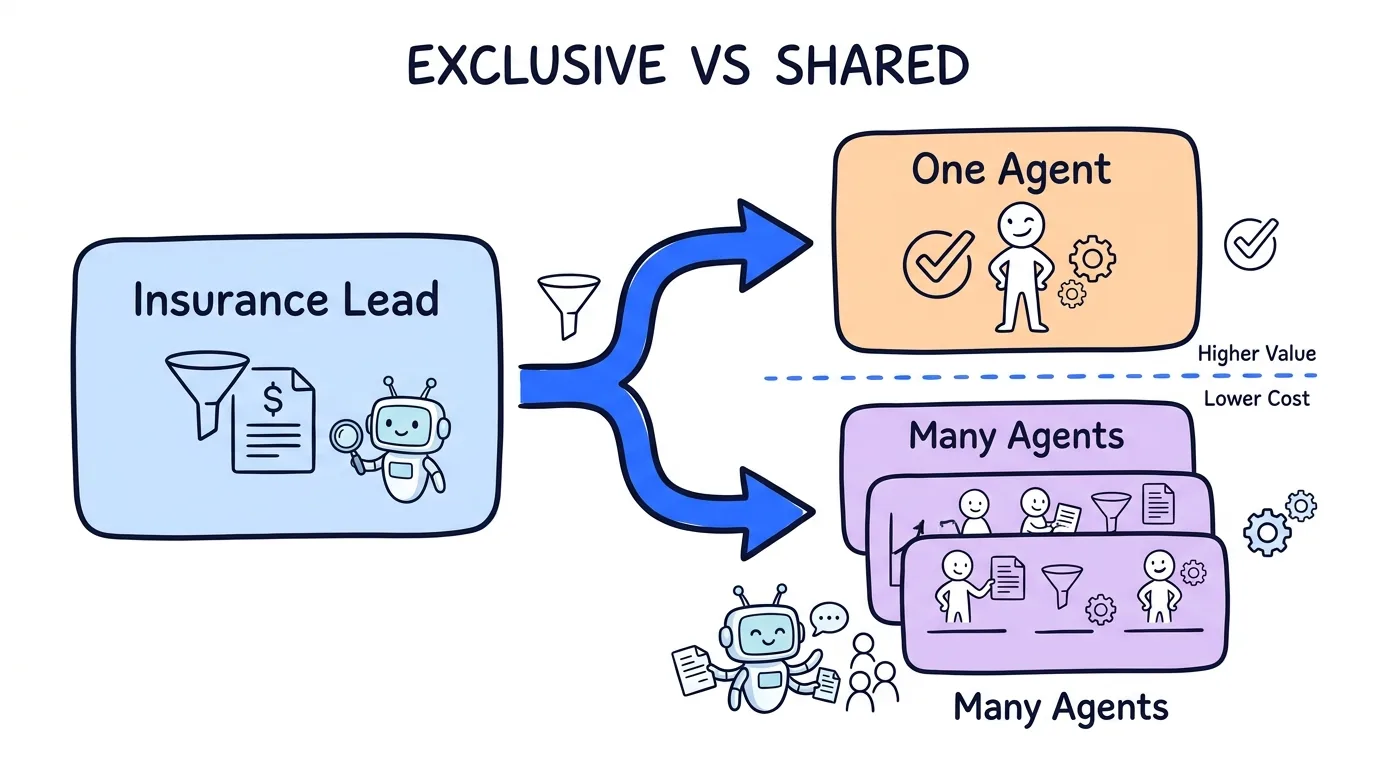
Research what competitors charge in your vertical, then price based on lead quality and exclusivity. Exclusive leads command 2-3x more than shared leads. Start slightly below market rate to attract your first buyers, then increase prices as you prove quality and build trust. Ping-post bidding lets buyers set their own prices in real time, often generating 20-40% more revenue than fixed pricing. Check our pricing page for distribution platform costs.
Conclusion
Starting a lead generation company is one of the most accessible online businesses you can build. The model is proven, the demand for leads across industries is consistent, and the tools to automate distribution exist today. The key is starting with a focused niche, tracking your numbers from day one, and building a tech stack that scales with you.
The difference between a lead gen company that stays small and one that scales to seven figures is almost always distribution technology and buyer network depth. Get those two pieces right, and the rest follows.
Ready to build your lead generation company on a real distribution platform? Lead Distro AI handles routing, scoring, billing, and buyer management so you can focus on generating leads and growing revenue. Start your free trial today.
About the Author
Founder & CEO of Lead Distro AI & Great Marketing AI
UC Berkeley graduate and former software engineer at Microsoft. Rafael built Lead Distro AI after managing over $10M in ad spend for performance marketing agencies (pay-per-lead and pay-per-call), including running campaigns for Neil Patel. He combines deep software engineering expertise with hands-on performance marketing experience to build tools that help these agencies scale profitably.
About Lead Distro AI
Lead Distro AI: AI-Powered Lead Distribution & Call Tracking That Maximizes ROI
The modern platform for pay-per-lead and pay-per-call agencies. Route, score, and deliver leads with AI-powered automation and real-time P&L tracking. Built for performance marketing agencies and lead buyers across legal, insurance, mortgage, solar, and home services verticals.
4 Distribution Methods
Waterfall, Round Robin, Weighted, Ping-Post
Ping-Post Auctions
Real-time bidding with sub-second routing
Real-Time P&L Reporting
Track revenue, costs, and profit per campaign
Call Tracking
Assign tracking numbers, record calls, and attribute conversions
AI Lead Scoring
Score every lead before routing to maximize conversion
Partner Portal
Self-serve dashboard for buyers to track leads