Exclusive vs Shared Leads: Which Pays More in 2026?
Exclusive vs shared leads: exclusives command 2-4x higher payouts; shared leads scale volume. Compare close rates, margin, and the right model for you.

Rafael Hernandez
Founder & CEO
Ex-Microsoft SWE · $10M+ PPL ad spend

I hope you enjoy reading this blog post. If you want to try Lead Distro AI for free, click here.
Author: Rafael Hernandez | Founder & CEO of Lead Distro AI
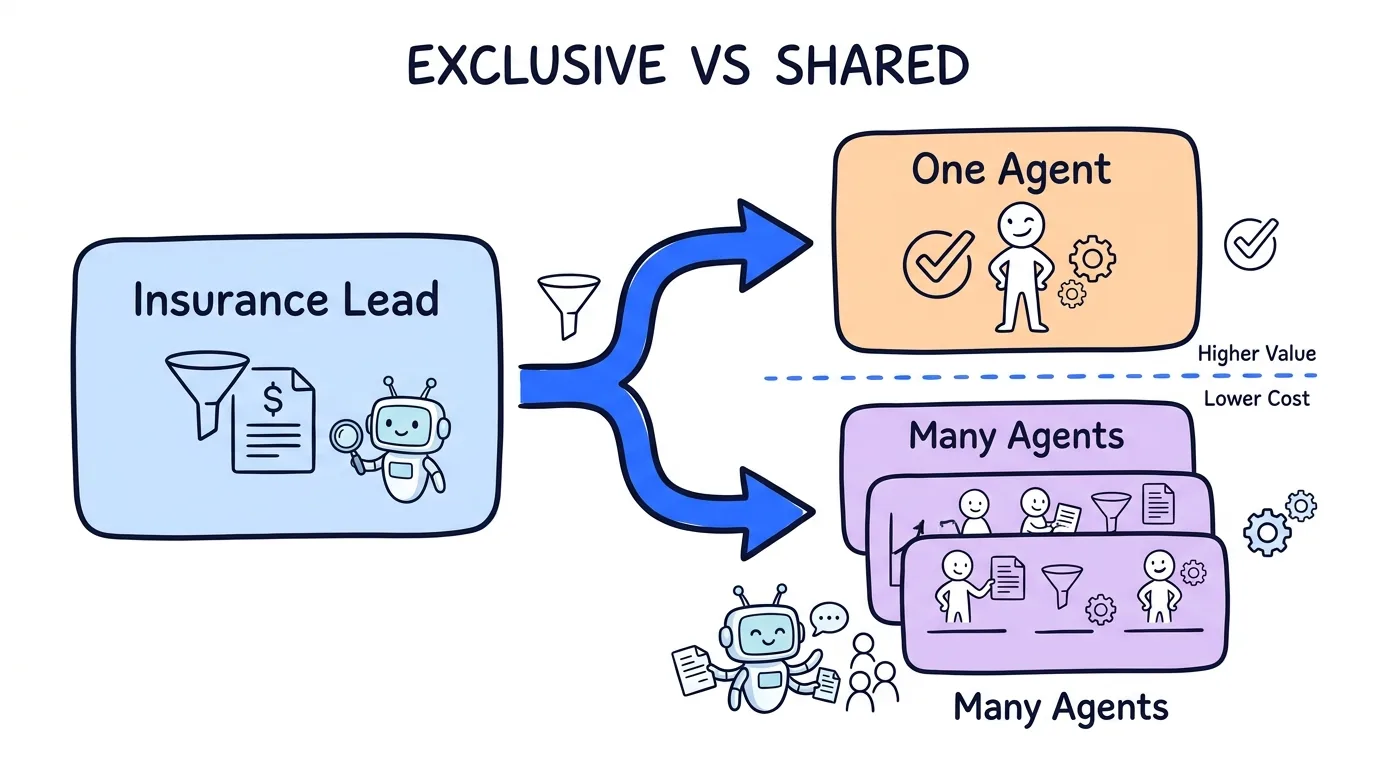
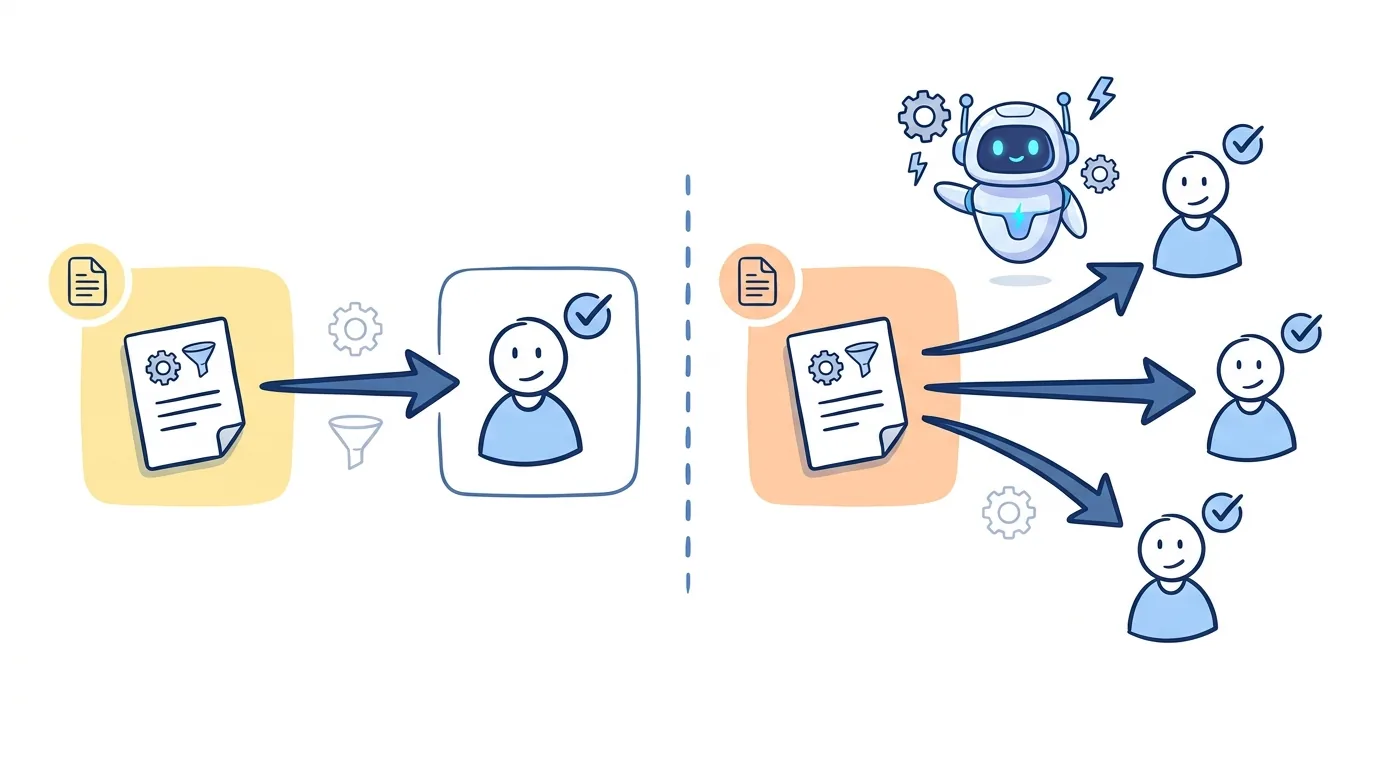
Exclusive leads are sold to one buyer only. Shared leads are sold to multiple buyers simultaneously. The choice between these two models determines your pricing power, close rates, and ultimately how profitable your lead generation business becomes.
According to a 2024 analysis by the Performance Marketing Association, exclusive leads command 2x to 4x the payout of shared leads in high-value verticals like legal, insurance, and mortgage. However, shared leads can generate higher total revenue per campaign when buyer demand exceeds available volume.
In short: Exclusive leads make more money per lead. Shared leads make more money per campaign. The right model depends on your vertical, buyer relationships, and distribution infrastructure.
Key Takeaways
- Exclusive leads are sold to a single buyer and command 2x to 4x the price of shared leads in most verticals.
- Shared leads (also called multi-sold leads) are sold to two to five buyers simultaneously, lowering the per-lead price but increasing revenue per campaign.
- Close rates for exclusive leads average 15-30% higher than shared leads because there is no buyer competition on follow-up.
- A blended model, selling some leads exclusively and others as shared, often maximizes total agency revenue.
- Lead Distro AI supports both models with configurable distribution rules, buyer caps, and real-time P&L tracking per lead type.
What Are Exclusive Leads?
An exclusive lead is a contact who has submitted their information and is delivered to exactly one buyer. The buyer receives 100% of that lead's attention, with no competing follow-up from other buyers or sales teams.
Exclusive leads command premium pricing because they remove buyer competition from the follow-up process. When a personal injury law firm buys an exclusive motor vehicle accident lead, they know their intake team is the only one calling that prospect. That certainty justifies paying $150 to $300 per lead versus $40 to $75 for a shared version of the same contact.
The trade-off for the lead seller is volume. If you sell each lead to only one buyer, you need more lead volume to hit the same revenue target. For example, selling 100 leads at $150 each exclusive generates $15,000. Selling those same 100 leads to three buyers at $60 each generates $18,000, but only if all three buyer deliveries succeed.
To model your specific revenue scenarios before choosing a model, use the lead pricing calculator.
What Are Shared Leads?
Shared leads (sometimes called multi-sold or non-exclusive leads) are delivered to two to five buyers simultaneously or within a short time window. Each buyer pays a lower per-lead price in exchange for the understanding that other buyers received the same contact.
Shared leads are common in insurance, mortgage, and home services verticals where buyers have large call centers capable of reaching prospects quickly. In these environments, buyers accept the competition because their speed to lead and follow-up process gives them a structural advantage over slower competitors.
The economic logic is straightforward. If you generate a mortgage lead for $15 in ad spend and sell it three times at $30 each, you collect $90 gross margin per lead. Selling that same lead exclusively at $75 nets $60 gross. The shared model wins when buyer demand is high and your distribution infrastructure can handle simultaneous delivery reliably.
Pay per lead economics shift significantly based on which model you choose. Understanding the math before committing buyers to either structure protects your margins.
Exclusive vs Shared Leads: Side-by-Side Comparison
| Factor | Exclusive Leads | Shared Leads |
|---|---|---|
| Sold to | 1 buyer only | 2-5 buyers simultaneously |
| Price per lead | $75-$300 (vertical dependent) | $15-$75 per buyer |
| Buyer competition | None | High (speed determines outcome) |
| Close rate | Higher (15-30% lift) | Lower (buyers compete on follow-up) |
| Revenue per lead | Lower (single sale) | Higher (multiple sales) |
| Return / chargeback rate | Lower | Higher (more buyer dissatisfaction) |
| Best vertical fit | Legal, high-value insurance | Mortgage, home services, auto insurance |
| Buyer experience | Premium | Commodity |
| Distribution complexity | Low | Higher (requires real-time routing) |
When Exclusive Leads Win
Exclusive leads are the right structure when your buyers are in high-stakes, low-volume verticals where each contact represents significant revenue potential.
Legal (Personal Injury, Mass Tort, Workers Comp): A personal injury law firm earns tens of thousands of dollars from a single retained case. At that value, paying $150 to $300 for an exclusive MVA lead or workers comp lead with a 10-15% conversion rate produces a strong ROI. Selling the same lead to three firms at $75 each destroys the buyer relationship because all three call centers race to the same prospect.
High-value insurance leads: Exclusive leads insurance buyers, particularly in health and life, pay significant premiums for guaranteed first contact. With exclusive leads insurance pricing ranging from $50 to $150 per contact, the math works for buyers who have disciplined follow-up processes. For a full breakdown by line and how routing enforces it, see our guide to exclusive insurance leads.
Low-volume, high-intent campaigns: When a campaign generates 50 to 100 leads per month, exclusive pricing maximizes revenue without needing to build a multi-buyer distribution system.
When Shared Leads Win
Shared leads work when buyers have the infrastructure to compete on speed and your volume justifies multi-buyer delivery.
Mortgage and refinance: Mortgage brokers receive shared leads regularly because they have dedicated contact centers that can call within 60 seconds of delivery. The buyer who calls first typically sets the appointment, regardless of who else received the lead.
Home services: HVAC, roofing, and plumbing companies buy shared leads because the job ticket value ($500 to $5,000) supports a lower close rate. A roofer buying 50 shared leads at $25 each, closing 10%, and averaging $4,000 per job earns $40,000 from a $1,250 lead spend.
High-volume campaigns: When your campaign generates 500 or more leads per month, the logistics of finding a single exclusive buyer for every lead become difficult. Shared distribution solves the volume problem and maintains revenue per campaign.
The Blended Model: How Most Agencies Actually Operate
Most profitable PPL agencies do not operate as purely exclusive or purely shared. They tier their leads based on quality and sell accordingly.
A typical blended approach works as follows: leads that score high on quality criteria (verified contact information, strong intent signals, correct geography) are offered to exclusive buyers first at premium pricing. Leads that are not accepted by exclusive buyers within a defined window are then offered to a shared buyer pool at a lower rate. Leads that the shared pool also declines are aged and sold at a further discount or returned to the supplier.
This waterfall approach maximizes revenue per lead by extracting the highest possible value from every contact generated. As Rafael Hernandez, Founder and CEO of Lead Distro AI, explains: "The agencies making the most money don't pick exclusive or shared. They pick both, dynamically, based on what each lead is worth in real time."
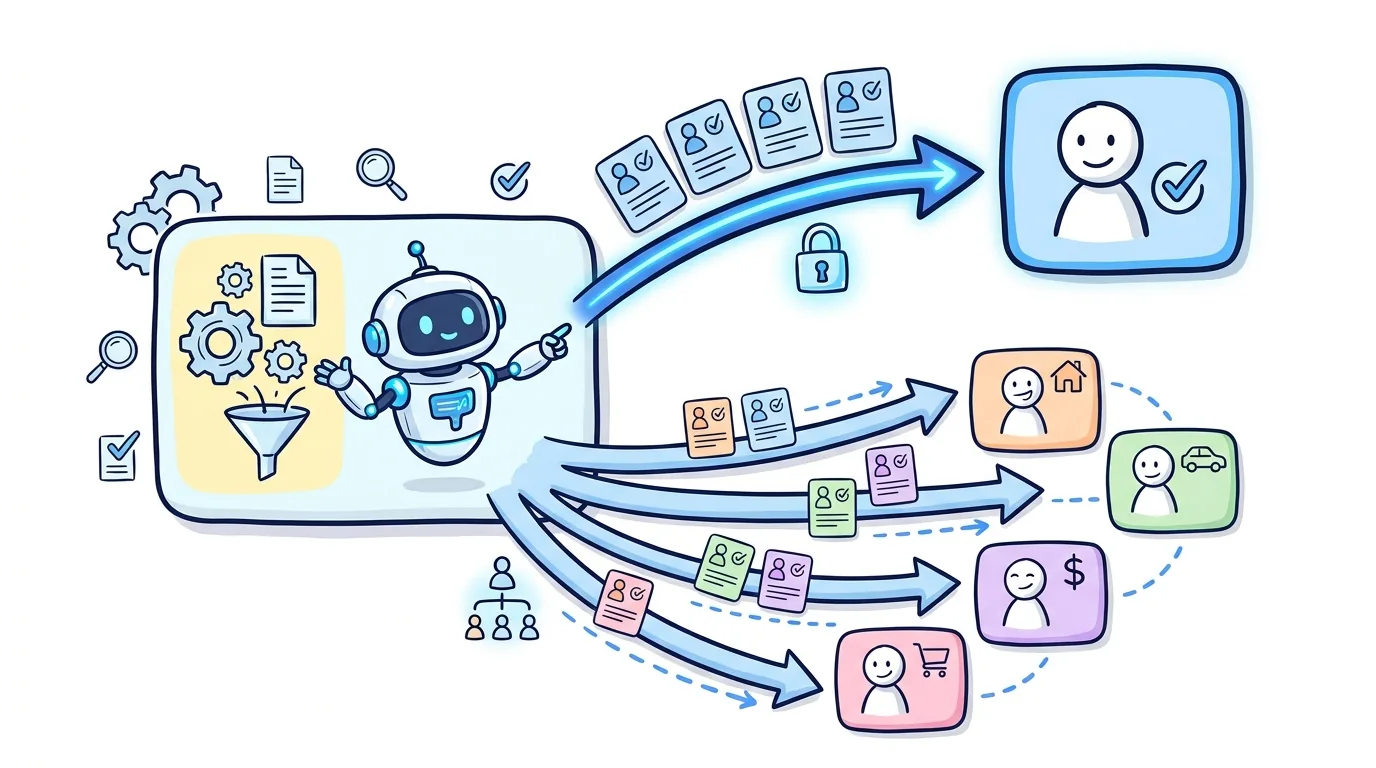
Lead Distro AI supports this blended model natively through configurable distribution rules. You can set exclusive buyer priority windows, automatic fallback to shared buyers, and revenue-based routing that adjusts delivery based on real-time buyer conversion rates. The product tour walks through exactly how to configure this.
How Distribution Software Handles Both Models
Running a blended exclusive and shared model without dedicated lead distribution software creates operational problems fast. Manual routing via spreadsheets breaks down once you need real-time buyer priority, automatic fallback logic, and per-lead margin tracking at scale.
Purpose-built lead distribution software handles both models in a single system. Exclusive leads are delivered via direct webhook to the designated buyer with a delivery confirmation timestamp. Shared leads are distributed to multiple buyers simultaneously (or in a defined sequence) with cap management ensuring no buyer receives more than their agreed daily or monthly volume.
Read our guide on how to price leads for the full pricing methodology across both models by vertical, and see lead distribution models for a breakdown of waterfall, round robin, weighted, and ping post methods that power both exclusive and shared distribution.
FAQ
Are exclusive leads worth the higher price for buyers?
Exclusive leads are worth the premium in verticals where each converted contact generates significant revenue and buyer competition on follow-up damages close rates. Personal injury law firms, Medicare supplement insurance agents, and high-end mortgage brokers consistently report higher ROI from exclusive leads despite the higher per-lead cost. The math is straightforward: if an exclusive lead converts at 12% versus a shared lead at 7%, and the average customer value is $5,000, the exclusive model generates more revenue per dollar spent on leads even at 3x the price.
How many buyers can share a lead?
Industry standard for shared leads is two to five buyers. Beyond five buyers, contact rates drop significantly and buyer satisfaction falls, leading to higher chargeback rates and damaged supplier relationships. In high-intent verticals like insurance and mortgage, most shared arrangements cap at two or three buyers to maintain acceptable conversion rates for all parties. The specific cap should be agreed upon in the lead purchase agreement and enforced by your distribution platform through buyer caps.
What is the return policy difference between exclusive and shared leads?
Exclusive leads typically carry a stricter return policy because the buyer has paid a premium for first-contact rights. Common return criteria include invalid phone numbers, out-of-territory geography, and duplicate contacts already in the buyer's CRM. Shared leads have looser return windows because the lower per-lead price reflects the competitive environment. As a lead seller, your refund exposure is higher on exclusive leads if your quality control process is weak, making duplicate detection and real-time verification critical before delivery.
How do I know which model fits my vertical?
The key variable is average customer lifetime value (LTV) for your buyer. If a buyer's average customer generates $3,000 or more in revenue, exclusive leads are almost always the right model. Below $1,000 average LTV, shared leads typically work better because the economics cannot support exclusive pricing. Legal, high-value insurance, and mortgage buyers almost always prefer exclusive. Home services, auto insurance, and solar buyers are often comfortable with shared leads given their volume needs and call center infrastructure.
Can I run both exclusive and shared models in the same lead distribution platform?
Yes. Lead Distro AI supports both models within the same platform, allowing you to assign exclusive buyers to individual campaigns or lead types while routing other leads to shared buyer pools. Distribution rules can be configured to offer leads exclusively first, then automatically fall back to shared distribution if the exclusive buyer does not accept within a defined time window. This blended approach maximizes revenue per lead across your entire operation without requiring separate systems for each model.
Conclusion
Exclusive leads and shared leads both generate strong revenue when matched to the right vertical, buyer, and volume profile. The most profitable agencies use both, routing each lead to the model that maximizes its value based on quality score, buyer demand, and timing.
The infrastructure to execute this well, real-time routing, buyer cap management, per-lead margin tracking, is what separates agencies that scale from those that stay manual. Sign up for Lead Distro AI and configure your first blended distribution campaign in under an hour.
Ready to run exclusive and shared leads from one platform? Start your 7-day free trial or tour buyer and client management to see how Lead Distro AI handles exclusive caps, shared distribution, and per-buyer P&L from one screen.
About the Author
Founder & CEO of Lead Distro AI & Great Marketing AI
UC Berkeley graduate and former software engineer at Microsoft. Rafael built Lead Distro AI after managing over $10M in ad spend for performance marketing agencies (pay-per-lead and pay-per-call), including running campaigns for Neil Patel. He combines deep software engineering expertise with hands-on performance marketing experience to build tools that help these agencies scale profitably.
About Lead Distro AI
Lead Distro AI: AI-Powered Routing for Your Leads, Calls, and Appointments
The modern platform for pay-per-lead and pay-per-call agencies. Route, score, and deliver leads with AI-powered automation and real-time P&L tracking. Built for performance marketing agencies and lead buyers across legal, insurance, mortgage, solar, and home services verticals.
4 Distribution Methods
Waterfall, Round Robin, Weighted, Ping-Post
Ping-Post Auctions
Real-time bidding with sub-second routing
Real-Time P&L Reporting
Track revenue, costs, and profit per campaign
Call Tracking
Assign tracking numbers, record calls, and attribute conversions
Lead Scoring
Score every lead before routing to maximize conversion
Partner Portal
Self-serve dashboard for buyers to track leads